


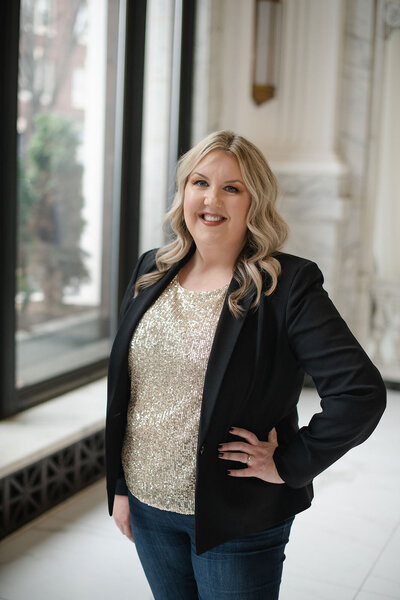
You can be the highest performer in the room, the one other people come to for help, and still feel rusty the moment the table turns and you are the one being evaluated. That is exactly where I found myself this past April. The last time I sat for an interview was over a decade ago, before I built my business, back when I was at AstraZeneca. Even though I coach women through interviews regularly, being on the other side of the table again made me a little nervous. So I decided to do something with it.
In this episode, I play you the raw voice memo I recorded two months ago, the moment I walked out of a panel interview for Leadership Frederick County, a competitive nine-month community leadership program with about a 20 to 25 percent acceptance rate. The memo is unedited, recorded before I knew the outcome, on purpose. Then I walk you through what I did, step by step, so you can use the same approach in your next interview.
This is the rare chance to watch someone practice exactly what she preaches, in real time, and find out how the way I teach interviews changes your experience with them.
What You’ll Learn
- Why I prepared with bullets instead of a script, and what I put on that list before I had my panel interview
- The kinds of questions I asked that took the interrogation feeling out of the room and got me real answers
- What I watched for across everyone I talked to, and what that one pattern told me about the culture
- The question almost nobody asks at the end of an interview, and why one interviewer lit up when I asked it
- Why the confidence I felt walking out had nothing to do with whether I got the spot
Key Takeaways
I prepared with bullets, not a script
I researched the program and looked up the people who would be interviewing me, just so I knew who they were. I reviewed my own application. Then I wrote down bullets, not a script. The accomplishment I wanted to be sure I mentioned. Something I had to overcome. Why they should choose me. What I was looking forward to. My best thoughts at the top of my mind, on paper, without sounding rehearsed.
Here is the part most people skip. I did not prepare for generic interview questions. I thought through what they might ask me specifically in the context of what I was interviewing for. That distinction changes everything about how you walk in.
I asked questions that go deeper than the usual ones
Not “tell me about the culture.” I asked what surprised them about the experience, whether anything was harder than they expected, and what ripple effect their participation had in their community. Those questions do two things at once. They get you real, unguarded answers. And they take the interrogation feeling out of the room.
When you let someone revel in what they actually loved, their authentic response tells you more than any polished talking point ever could.
I read the through-line across everyone I talked to
The thing that stood out most was not what I expected to learn about the program. It was the warmth and commitment of the alumni. They came from different cohorts, and that consistency told me something real about the culture and about how they choose people.
You can do the same thing when you interview at a company. When you meet several people across the process, look for the through-line. What do they have in common. What does that pattern tell you about the place you might be walking into. And remember that you are interviewing them too. This was a real commitment of time and money for me, the same way a new role is. I was assessing fit as much as they were, and that changes how you carry yourself in the room.
I asked the question almost nobody asks
At the very end I said, now that we have talked, do you have any hesitancy about my fit for this program. One of the interviewers lit up and said it was a fantastic question. It gives the people across the table a chance to surface a concern while you are still in the room to address it. And it signals real confidence.
My follow-up matched their values, not just my qualifications
This was a community-based program, and these were alumni donating their time. A sterile recap of why I was qualified would have hit the wrong note. So I thanked them for the warmth and commitment that came through, told them what that said about the culture, and said I hoped to earn a spot. Either way, I would love to connect over coffee and see them in the community. If I tell people I lead by listening to understand, then I have to actually do that in the interview and respond like a real person, not like a resume.
The Bottom Line
I found out two months later that I was accepted into the 39th cohort. But here is what I want you to take from this. The reason I felt good walking out of that room, before I knew anything, was not the result. It was that I had prepared well and shown up as myself. I put myself in a new and uncomfortable situation I did not have to put myself in, for something I wanted. I controlled the preparation and how I carried myself. The outcome came later, and it could have gone either way. The confidence came from me, not from the validation.
You will never feel ready for the parts you have not done in a while. You get ready by preparing well and acting with courage, knowing you are worthy regardless of how it turns out. Listen to the full episode for the raw memo and the complete breakdown, and use it before your next interview.
Ready to Take the Next Step?
If you want personalized support applying this work to your own career, learn more about The Right Move Protocol—my coaching experience for women in Pharma and Biotech who want strategic career growth.
RATE, REVIEW, AND SUBSCRIBE TO APPLE PODCASTS
If you are loving the podcast, please consider rating and reviewing my podcast! This helps me support more people — just like you — to get happier in their career and their life by making the show more visible.
Click here, scroll to the bottom, tap to rate with stars, and then select “Write a Review.” Let me know what you loved most about the episode!
Also, if you aren’t already, be sure to subscribe to the podcast. If you’re not subscribed you can miss out on any bonus episodes! Subscribe now!
Transcript
If you’re someone who wants to find out just how good your career can get and how much of a difference you can make in the pharma biotech industry, you are in the right place. Welcome to Your Worthy Career, the podcast for women building meaningful, high-impact careers in pharma and biotech. I’m Melissa Lawrence, career and leadership coach, organizational psychology expert, and the founder and author of Your Worthy Career. I spent over 12 years inside this industry in talent development across biotech and large pharma, and I’ve been coaching women in this space exclusively ever since. I bring you research-backed strategies, an insider perspective on what’s actually happening inside industry organizations, and the perspective shifts that get you real results.
Here we build careers that are meaningful, aligned with who you actually are, and positioned for the impact you’re capable of making. Let’s get started.
Hello, hello, and welcome to this week’s episode of the podcast. Now today is going to be a little bit of a different episode, and I can’t wait for you to listen to this all the way through. Now I coach women through job interviews pretty regularly, and recently I sat in on one myself for the first time in about 12 years, and it was a fun experience to practice what I preach and do the exact things that I tell clients to do, finding out really in real time for me whether my own advice holds up under pressure. This was a unique experience, and I thought, what a great opportunity for you to go through it with me. So here, how I prepared, the questions I asked, how I felt.
So I actually recorded a voice memo right after I interviewed 2 months ago, and today I’m going to play you that raw voice memo I recorded right after that interview without edit, before I knew how it turned out. And And then I’m going to walk you through what I did step by step so that you can learn from it and do this for yourself if you are in an interview season right now. So let’s get into it. Here’s the situation. Back in April, I interviewed for a leadership program in my community called Leadership Frederick County.
It’s through our Chamber of Commerce and it’s a 9-month community leadership program. And there’s a real time and money commitment for this. And I heard about this program when I worked with AstraZeneca because we would nominate up to 2 people to apply, and if they got in, sponsor their participation. So it’s a very competitive program. My boss had actually told me that the acceptance rate was 20 to 25%.
So to give you some context, here is how the Chamber defines the program. Leadership Frederick County is designed for Frederick County professionals who want to better understand their community and play a meaningful role in its future. The program offers immersive hands-on learning experiences led by respected county leaders, paired with graduate-level leadership coursework taught by organizational leadership experts from Hood College. So over the course of 9 months, participants gain a deeper understanding of the county as their living lab, exploring its people, systems, and challenges firsthand. Along the way, participants build strong relationships with a diverse network of peers, connections that often become essential to leading effectively and creating lasting impact in our community.
So over the last year, I actually met a couple of women in the community who had gone through it, and this had kind of come up in conversation. And when they met me individually and separately, they both said, have you heard of this program? You would be great for it. And so hearing my leadership’s perspective in industry and those colleagues who had gone through it, and then as a business owner, hearing positive feedback and encouragement, I decided to apply. Now the application involved a pretty lengthy application with essay-type questions describing yourself, your work, your community and charitable involvement, your personality, what you stand to gain, what you can give to the program, and so on.
You also had to get a written letter of recommendation for the program from someone who could speak to your work and your character. And then if you pass the application process, that was gate one, you would be invited to a panel interview with program alumni and program leadership. And I was thrilled to be invited to the interview, passing that gate one, like you all with like the screening interview, right? And I realized something kind of getting ready for that interview. The last time I interviewed for anything was over a decade ago.
I’ve had my business and before that I was at AstraZeneca for many years. So even though I help women with interviewing very regularly, I was out of practice for myself personally. And honestly, it made me a little nervous. But then I realized what a great opportunity for you and for me. I was going to practice exactly what I preach, the research, the questions, the follow-up, all of it.
And right after I recorded that memo while it was fresh, before I knew the outcome, so I could share with you my thoughts about it either way. But I could not share the selection or what happened for a couple of months, which is why I had to wait a little bit of time to share this with you.. So I’m going to play the memo for you now, unedited. It’s about 9 minutes, so listen for how I prepared, the kinds of questions I asked, and what I observed about the people and the program. Then I’m gonna break it down for you.
Here it is. Okay, I just got done interviewing with Leadership Frederick, and I want to note this because it’s a 2-month interview. So, um, I applied about, uh, a month ago, was invited to an interview. I just had the interview now. It’s the beginning of April and they are making their decision in the beginning of June.
So there’s a 2-month window where they’re interviewing and they are going to select up to 50 people to participate in this program. And it was a really great experience for me. Not only like, I’m not even going to talk about Leadership Frederick specifically, but more around me going back into my client’s shoes. So I actually haven’t interviewed for 12 years. I’ve had my business, and then before that I worked at AstraZeneca for 6 years.
So I haven’t interviewed for quite some time, and so I really had to practice what I preach. And so I did not have a script. I thought through ahead, I did my research, of course, on Leadership Frederick. Once I had the people that was gonna be interviewing me, I tried to find some information on them, just kind of see who they were. I also thought through what they might, um, ask me.
And also I reviewed the application that I submitted. From there, I kind of jotted down Okay, from these anticipated questions they might ask me, what, um, what is something that I want to make sure I remember? Because that is something I also suggest with clients, is not that you have a script, but that you put some bullets in place of what are, for example, um, an accomplishment that you want to make sure that you mention if they ask about your biggest accomplishment, or what is something that you struggled with or something you had to overcome, or Um, why should they choose you? Like things like that. Um, what are you looking forward to most?
So I wanted to have some, some notes there so that I had kind of my best thoughts at the top of my mind, um, written down on my piece of paper. I also then thought about questions that I wanted to ask, and so I asked my questions. And I also, when I approach this, someone— there’s something I also suggest with clients is that you kind of do more advanced questions, like questions that are going to show that you care, not kind of the run-of-the-mill, like, tell me about the culture, what was your favorite thing. Um, so the questions I actually asked is, um, what surprised you about the experience? Is there anything that was harder than you expected?
Um, and what is like the ripple effect that their participation has had. Like when they walk through the community, when they meet with people, like what is something that they see is different because of their individual contribution or their collective contribution with a group project? Um, and that really allowed them to not only share with me the answers to those questions that I wanted to know the answers to, but also, um, you know, take away the interrogation, let them revel and what they really enjoyed. And those authentic responses really tell me a lot. And it was kind of funny because the thing that stuck out to me the most was like, I thought I was going into this and I was going to learn more about the program, some of the things I might learn.
I had some questions on that, but what actually came really through for me was the warmth and commitment that the alumni have. Like, they are committed, they were warm, they were kind, and they were all members of different cohorts. So that tells me something about the culture, that tells me about how they curate people. And like, you can apply this too when it comes to employers. You can look at when you’re meeting with multiple employees, what is the through line of those employees?
What does that tell you about the culture of the company, right? Because I’m assessing this opportunity to see if I wanna do this. This is a big time commitment. It’s a 9-month program. Um, there’s a financial investment involved.
Um, so I wanna make sure that this is also a good fit for me the same way that if I was interviewing for a, a new job. So the last question I asked is also what I suggest with my clients, which is, you know, how do you see me fitting into this role? Or do you have any hesitancy about my fit for this role? Those are questions, one of those variations that I suggest asking.. And that was so great.
So I said at the very end, you know what, I was like, now that we’ve had a chance to talk for this last half an hour, do you have any hesitancy about my fit for the program? And the one person on the panel— so I was interviewing with 3 people— the one person was like, oh my gosh. He was smiling so big. He was like, that is a fantastic question. And I was like, thank you.
He’s like, but that’s what we’re going to talk about you when you leave. And so we all laughed, so it got everyone laughing too, which we were laughing throughout the interview anyway. Um, and I was like, yeah, I was like, so you’re not gonna give me any opportunity to address it? He’s— and so we were just like joking about that. And then he went on to say how, um, just from the 25 minutes of our conversation, he felt very confident.
He’s like, I can only speak for myself, we could drop you into any cohort and you’ll probably leave with a room of friends that like your personality is exactly what we look for, and, um, you would just really do well, and people would enjoy working with you, you would enjoy working with them, like you are kind of the ideal fit. And I was like, oh, okay, thank you. And then we kind of ran out of time, so the other folks didn’t get a chance to give their answer, but I thanked them. I sent them a personalized message to thank them at the end. Um, that wasn’t the typical, you know, let me recap my qualifications for this.
It was Um, speaking more to the heart and the personalization of this experience. So when you’re interviewing, you want to look at the values. Hopefully the place you’re interviewing has values that are aligned with you. Um, so you want to have that alignment, or you probably won’t be happy if you don’t have that alignment. And so this program I already know has that alignment, especially from having this interview.
I feel a lot more confident that this would be a good fit for me. And so I want to act in alignment with what I say. So what I mean by that is when I say that I work with different people by listening to understand first, that means when I’m interviewing, I need to listen to understand, give personalized responses, right? So I’m demonstrating what my words are saying. So this is a program that is all about community.
These were prior alumni that are donating their time to help interview and select the next cohort. And so it would not be really appropriate for this culture or energy for me to kind of go in and recap why I’m qualified or just give kind of a sterile thank you. That’s probably what many others are doing. Instead, I wanted to lead with thinking that, like, appreciating them and giving them a compliment around the warmth, the commitment, the kindness that came through, and what that tells me about the culture of this program and how they are sustaining it by having people like them be part of the selection process to continue this experience moving forward to make it a good program. This program’s been involved around since 1988, and everyone I speak to says it’s an amazing program.
So That is how I responded. And I also, because this is a community-based program and I would love to continue a conversation with them, also recognizing that it would be awkward or maybe put them in a bind or uncomfortable situation to have any follow-ups with me before the selections are made, I said, you know, I hope to earn a spot in the next cohort, but either way, I would love to connect with you over coffee sometime and hope I see you in our community, right? So that again is demonstrating that my value is aligned with their values because it authentically is around community. Community and giving back, and also practicing emotional intelligence that that value I have isn’t dependent on whether or not I earn a spot in this next cohort. So I think that this was just such a great experience for me to go through as a client, to interview, have this time, do the prep, practice what I preach, um, from both the interview delivery and also from the thank you, and now I have 2 months to wait.
So at least in the job process, you typically hear back within a few weeks, but this is like 2 months. So we will see. And because it’s in the process, to respect this process, um, I don’t know the outcome yet. I wanted to record this because who knows, like, who knows if I get in or not. And also, I don’t, I don’t think it’s appropriate for me to talk about this until, um, until their process is complete.
So I wanted to have this for at that time so I could share this with you. All right. Okay. Let’s dissect this a bit because there were so many lessons that you can use. One, I prepared without a script.
I researched the program. I looked up the people who would be interviewing me just to know who they were. I thought through what they might ask and I reviewed my own application in advance. Then I jotted down bullets, not scripts, not line by line, the accomplishments that I wanted to make sure I mentioned, something I had overcome, why they should choose me, what I was looking forward to, so that my best thoughts about the things I thought they might ask me were top of mind on paper without sounding rehearsed. That’s why the bullets worked better than the script.
It’s worth noting I didn’t think of common questions I might get asked. I thought things they might ask me in context to what I was being interviewed for. Okay. So that is a specific strategy that I do with my clients is there’s not just a general generic base that you’re using for prepping for interviews. It’s all personalized to your experience, which is what makes it so effective.
Number 2, I asked questions that go deeper than the usual ones. Not tell me about the culture. I asked what surprised them about the experience, whether anything was harder than they expected, what the ripple effect their participation had in the community. Those questions do two things: they get me real answers and they take away that interrogation feeling. They let the person kind of like revel and reminisce in what they actually loved.
And those responses that are authentic tell me so much because, truth be told, I wasn’t 100% sold yet if this was something that I wanted to do. I wanted to learn a little bit more about it because I have a lot of experience and expertise in leadership development because I have an organizational psychology graduate degree, I did have a little bit of like, is this going to be enough value add for me? And so asking questions that were going to allow them to give me authentic responses and give me the information that I needed to make a decision was really important. Number 3, I read the through line across everyone that I talked to. The thing that stood out most was not what I expected to learn about the program.
Actually, that’s not what sold me at all. It was the warmth and the commitment of the alumni. They were kind. They were all from different cohorts. And that consistency told me something real about the culture and how they chose and selected people for this program.
You can do the same thing when you interview at a company, when you meet several people, look through that or for that through line. What do they have in common? What does that tell you about the company or the culture? Number 4, remember that you are interviewing them too. This was a big commitment for me, time, money, the same way a new job is.
So I was assessing fit just as much as they were. That can change how you carry yourself in the room. This is peer to peer, right? There’s not like one person that’s above another. 5, I asked the question almost nobody asks.
At the very end, I said, now that we have talked, do you have any hesitancy about my fit for this program? One of the interviewers lit up and said that that was a fantastic question. And it also, this question, it gives them a chance to kind of share any concern while you’re still on the call or in the room to address it. It also shows real confidence, right? That you’re not just leaving things up to chance.
You’re willing to answer the hard questions, you’re willing to address objections or hesitancy that people might have. I actually talk about this in my podcast episode on how to prep for an interview. This is just a hack question. I give you a couple of different ways to ask it, and it is just proven to help increase your chance of getting an offer. So you can dig into that episode when we finish this one.
Number 6: My thank you matched their values, not just my qualifications. So this is a community-based program, and these were alumni that were donating their time. So kind of a sterile, here’s a recap of why I’m qualified, why you should choose me, would have been the wrong message. Instead, I thanked them for the warmth and the commitment that came through, told them what that said to me about the culture, and said that I hope to earn a spot, but either way, I would love to connect over coffee and see them in the community. And that is me acting in alignment with with what I say I value, right?
Because this really was about community connection, giving back to the community, being someone who has, you know, strong integrity and ethics and has values around making a positive impact, right? Which I do with my work. And that’s also what I want to do in the community through this program. So if I tell people I lead by listening to understand, for example, then I have to listen to understand in the interview and respond like a real person. So that’s going outside of your resume, right?
You want to act in alignment with how you are wanting them to think of you and who you believe yourself to be. And sometimes when you’re in these stressful situations, you can lose some of that integrity, not on purpose, but just like the stress and the anxiety get to you and then you’re not demonstrating the best version of yourself. So how did it go? What was the outcome? So after 2 months, I received an email inviting me to the 39th cohort of Leadership Frederick.
39Th. This has been going on for 39 years. So I immediately let my former boss know. I was so excited. She’s familiar with the program and she actually wrote my letter of recommendation.
And it was funny because she said, I was really thinking about you and whether or not you got in, but I didn’t want to ask because I wasn’t sure. And I thought, what if you didn’t? And that is such an important lesson because you can be qualified, you can do all of the right things and have it not work out. Right? Like my former boss wrote me the most beautiful letter.
Right? So she clearly believed in me. She told me I would be a great fit for this. I clearly did all of the quote unquote right things, but like at the same time, she was like, I didn’t know. Right.
The decision panel is outside of us. It’s external, right? And people have their own priorities for why and how they select people that really aren’t in all of our control. So that is just important to note. And I want you to think about this.
The reason that I felt good at the end of the interview, before I knew anything, before I knew the outcome, was because I had prepared well and I had shown up as myself. I put myself in a new and uncomfortable situation that I didn’t have to do for something that I wanted. I controlled the preparation, I controlled how I prepared, how I carried myself, and the outcome came 2 months later. And it could have gone either way. The confidence came from me, not the outcome or validation, right?
I felt good about how I handled this because of the authenticity and intention that I put behind this process, right? So I felt confident either way. I didn’t need the validation to prove something for me. And that is the whole point. You will never feel ready for the parts that you have not done in a while, for the things that you are out of practice in, right?
For the things you haven’t done before. You get ready by preparing well and taking action with courage, knowing you are worthy regardless of the outcome. So before your next interview, do not write a script. Do the research on the role and the people. If you can write your bullets, bring better questions, read the room for that through line, ask if they have any hesitancy and follow up like a human being.
In a way that is aligned with your values and how you say you are. I have a full episode, like I said, on prepping for your interview. It’s actually a go-to for a lot of listeners. So if you’re in the interview process, go check that out. And in an upcoming episode, I’m actually going to talk about the experience of coming in second when you did everything right and what to do with that feedback.
All right. Have a great week.